RE-IMAGINING CONSENT IN TECHNOLOGY
A CASE FOR CONTEXTUAL CONSENT IN TECH
Click HERE for the toolkit
Consent in tech is too often treated as a one-time, contractual checkbox.
It is often unclear, overly legalistic, and difficult to navigate in real life.
As technology becomes more embedded within everyday life, consent needs to reflect human values, norms, and expectations
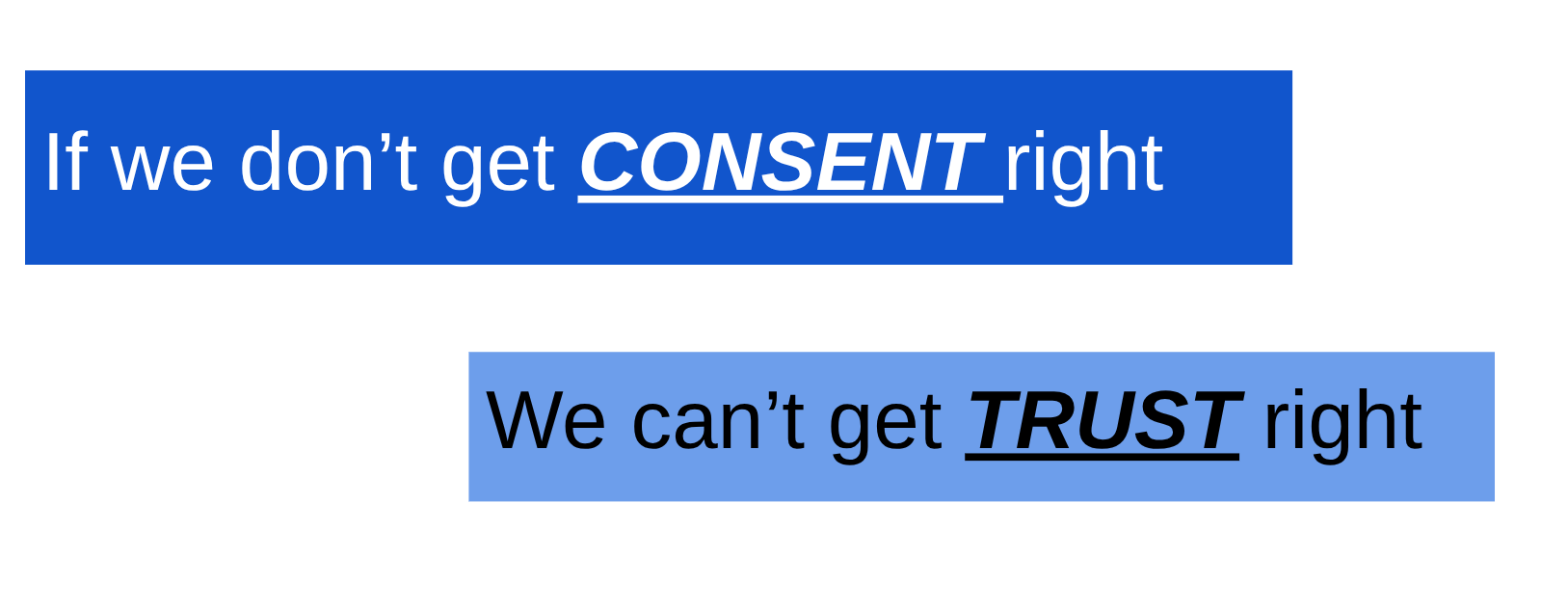
We can’t get trust right if we don’t get consent right
meaningful consent in tech is contextual
It depends on what people value, what they expect, and what real choices they have when technology is present.
ABOUT THE PROJECT
This project was sponsored by the Stanford University McCoy Family Center for Ethics in Society. We explored how consent is viewed in social and human-technical interactions and re-imagined consent in technology by prioritizing human values, expectations, and community accountability—not just non-negotiable informational terms. Our approach was simple: we explored what matters to people, applied that understanding systematically to create a meaningful consent framework as a tool anyone can use to demand change where current practices are performative or insufficient.
THE WORK
We combined research and community input to ground this work in real experience and practical design. The project includes a literature review of 122+ academic papers, a survey with 300 responses, 63 one-to-one interviews, and 7 workshops with 39 participants, alongside industry partnerships and a public-facing deliverable at ConsenTech.org.
PROJECT FINDINGS
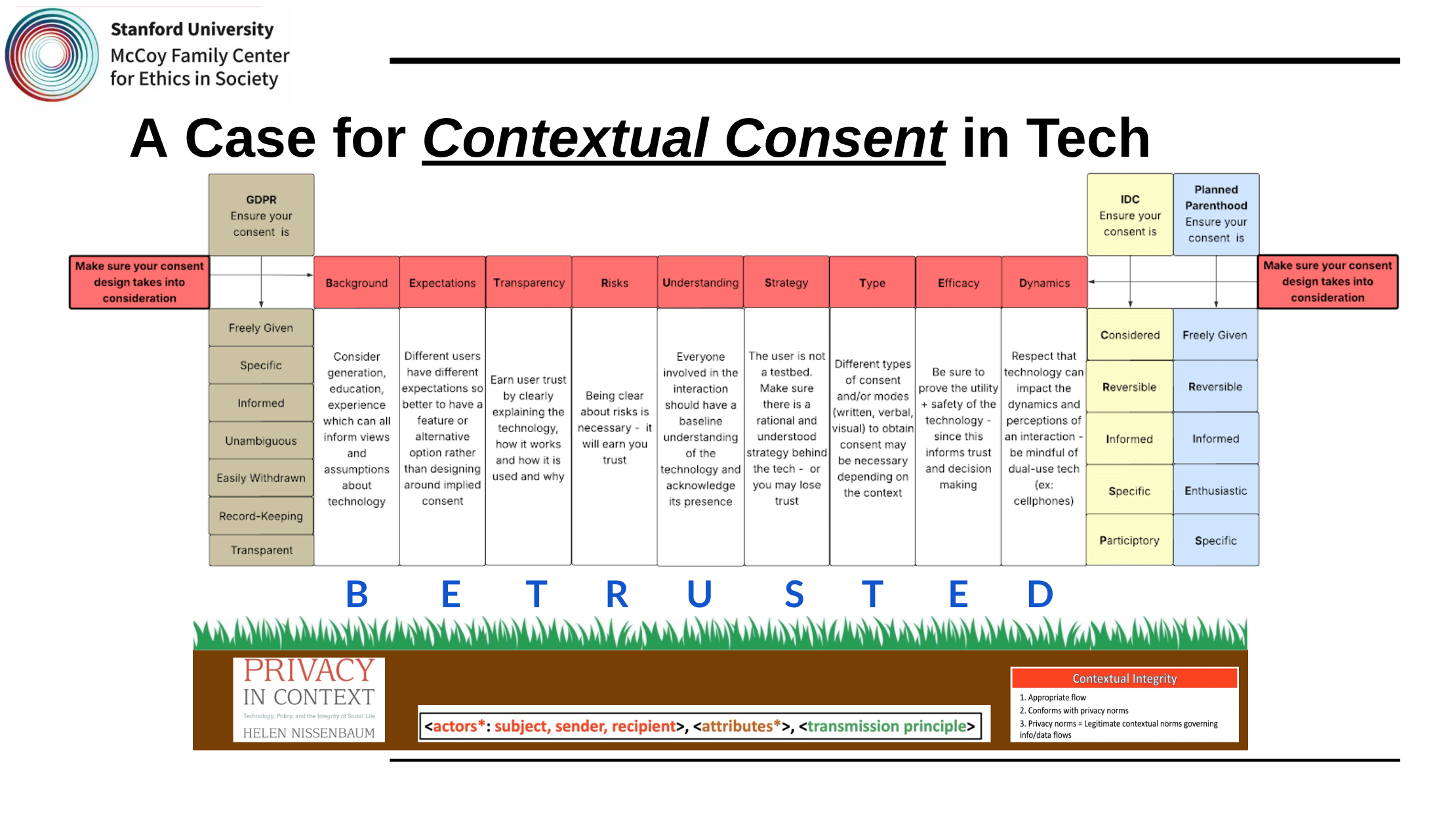
Meaningful consent is not one-size-fits-all. Across contexts, it consistently depends on transparency (clear explanations of what is happening and why), negotiation (real choices rather than implied consent), and mode (how consent is requested and expressed). It may also depend on community input, accountability, and the type of consent used—because different situations require different levels of clarity, control, and ongoing permission.
CONSENT TYPES PEOPLE POINT TO
Participants and prior research highlight multiple consent types that may be needed depending on context, risk, and power dynamics at play in the interaction including informed, explicit, continuous, negotiable, community-informed, community-directed, and governed consent.
THE “BE TRUSTED” FRAMEWORK
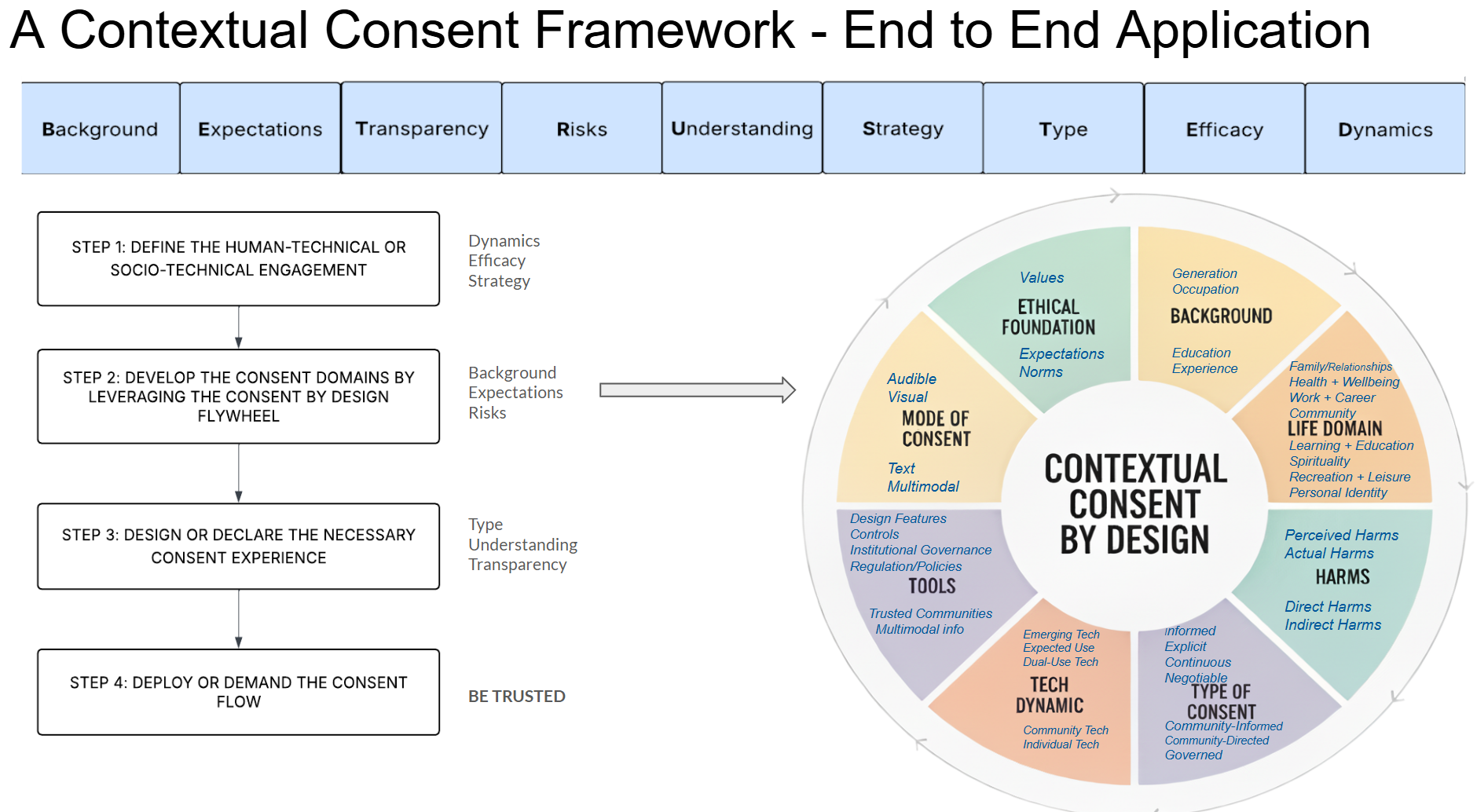
A core output of this project is the BE TRUSTED framework, which guides teams to design consent around user context and trust. It prompts designers to consider user background and expectations, ensure transparency and shared understanding, communicate risks, use technology with an explicit strategy, select the right consent type, demonstrate efficacy, and account for interaction dynamics that technology can reshape.
ETHICAL TENSIONS
This work also recognizes the hard problems: “consent” is a loaded term; consent practices often protect industry interests; consent in tech is frequently contractual and performative; regulation is expensive; and re-imagining consent is difficult without strong incentives. These tensions are exactly why practical frameworks, community-informed design, and measurable evidence matter.
project deliverables
-
We began our project with an expansive literature survey of the consent landscape in digital contexts, reviewing over a hundred sources across multiple disciplines. This included foundational philosophical and legal theory on consent, empirical studies of current technology practices, emerging issues in areas like Artificial Intelligence and IoT, and psychological research on how people understand consent.
-
We developed a complementary taxonomy to map key concepts and terms. This taxonomy defines important constructs (e.g., contextual integrity, dynamic consent, tacit consent) and helped us ensure a consistent analytical framework as we synthesized findings. In some cases, where we found a term missing from academic iterature, we defined it ourselves - such terms are annotated as such.
-
The Contextual Consent Framework consists of a set of principles to consider when designing consent flows into human-technical and socio-technical interactions; the four steps that enable the operational application of these principles in practice and a flywheel that defines the key domains of contextual consent.
-
The purpose of this toolkit is to provide a concise overview of the Contextual Consent Framework, offering practical examples of its application for various audiences. This toolkit also aims to provide a compilation of additional resources to assist everyone in advocating and designing consent flows into socio-technical systems that are actually meaningful for the people they are meant to serve.
-
Short Form (brief summary of key project methodology and findings)
Long Form (extensive Write-Up with details on methodology and findings)
Sign Up for the Newsletter
Interested in staying connected? Sign up for our newsletter!